Leaving Texas
Moving is a lot of work...

Packing and moving house really does take up a lot more time and energy than I expected… which was naive... so, all of the sections of this are incomplete and I just really didn’t do a lot of my homework on this one, but I wanted to post it today no matter what state it was in.
Moving Today
This is it, my friends! Today, literally right after posting this entry, almost exactly 8 years to the day after arriving in Denton, I will be getting in the truck and we will start driving our entire lives from DFW to the Hudson Valley.
Where has that time gone… how to put anything into words… Moving here gave me everything.
I’m thinking about all the things I would like to say to everybody that I’ve ever met here, all the stories that I would wanna relay and remember, all the lessons that I’ve learned, and the friends that I’ve made... but how do you compress eight years into a single statement?
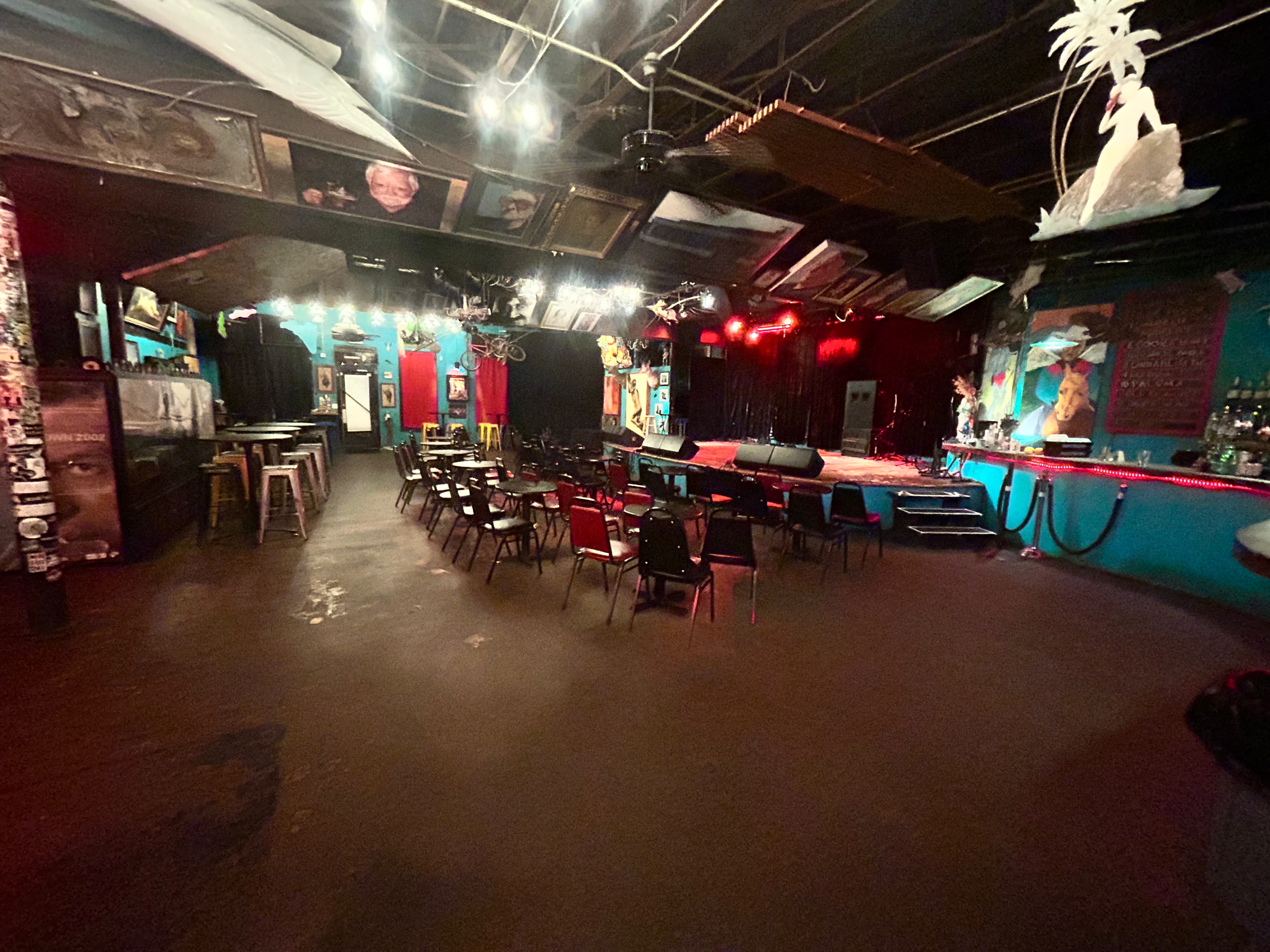
We had our going away party at Dan’s Silverleaf on August 2 and over 100 people came. It was really the best sendoff I think we could’ve had and I’m really glad we did it. Even though initially I was saying that I wasn’t super interested in doing a going away party or anything like that; as sentimental as I am I don’t always like a ton of ceremony for things like that, but it was the right thing to do and it was the perfect thing to do and it’s been a real long time since I cried that much and felt that much love and affirmation from so many different people. Moving to Texas gave me everything. It gave me a career. It gave me friends. It gave me some sort of quantifiable reputation. It gave me Sawyer Editions, and it gave me so much art and music-making that I don’t really know how to qualify any of it beyond raw numbers. Despite the title of this Substack, we just don’t have the time to go through all the data right now, and honestly, I don’t think I have the emotional fortitude to go through all of it right now either. There were folks at the going-away party who played on the very first recording I ever made in Texas. There were folks who were at the very first show I played in Texas. There were friends I’ve known for essentially this entire time, just as much as there were friends who have since left. We found a home here. We found a community. We found each other, and we really grew up here.
We ended up here by accident in the first place. I had already accepted a fellowship at the University of Maryland, but after visiting the university and seeing the area, Kaiman and I both knew that it just wasn’t the right fit. Neither of us really wanted to go there or move there. So when the equivalent offer from Texas came at the last minute, we figured there was no way it could be worse, so we gave it a shot. I never expected to live in Texas for my entire life. I never wanted to live in Texas for my entire life. But Denton, Texas, is home, and it will always have that special place in my heart.
I don’t really have a good way of putting this in words because it’s more a feeling or a vibe than perhaps a fact, and this is not a dig on DFW or North Texas by any means, but I have honestly felt like I’ve been a bit more complicit or at least not pushing as hard as I could (or should) within the DFW scene for a while now. I have always tried to support my local scene as much as I possibly can, avoid drama or personal conflict and be a steady hand at shows. Still, due to a number of factors, I’ve felt like I’ve been going through a lot of the motions rather than pushing myself here in DFW like I used to. I never phoned it in, but I’ve had my eyes elsewhere: the last 3 years I’ve spent 33 to 50% of each year on tour or on the road in some way. That’s a long damn time. In that time, composing can slow down; you have dreams of projects that you just can’t do; I wanted to start like 3 different ensembles dedicated to different performance practices, but I seemingly never found time, or bandwidth, or the right fit of people, or the right venue, or the million other excuses that made certain things impossible. Plus, scenes organically change from people moving, aesthetic changes, venues closing, scene drama, and a million other things.
You never know what’s going to happen. I sure as hell didn’t. I used to have a bad habit of comparing my CV and résumé to other people’s, and while I don’t consider myself an especially envious person, I would absolutely be envious of what my résumé looks like now compared to when I came here in 2018. Maybe it’s a butterfly-effect thing, and we’ll never really know, but I just don’t think this would have happened anywhere else. I don’t think it would have happened on my terms, or in the way I wanted to do it, anywhere else. I could never have expected this much. I could never have asked for this much. I could never have imagined being given this much. I have been incredibly, almost absurdly, fortunate.
I consider myself extremely lucky to have known, while it was happening, that these were good times. I tried to take advantage of them as much as I possibly could: to work as hard as possible, play as hard as possible, have as much fun as possible. More importantly, I understood how precious that was, and how rare it is to actually recognize that kind of thing while you’re living through it. I feel pretty confident that I didn’t take any of it for granted. I especially don’t take for granted how lucky I was to know, in the moment, that this was special. I knew how special it was to be making all those recordings. I knew how special it was to be playing all those shows. I knew how special the friends and community we built here were. I will be grateful for that for the rest of my life.
There is poetry here. The state motto of Texas is one word: “Friendship” and the state motto of New York is one word: “Excelsior” - ever upward.
See you up there, y’all.
Halifax Briefly
Two years ago, my mother and father declared that we would take a family trip to Halifax, Nova Scotia, in July 2026. Little did we know that we would be moving to New York at exactly that time, but after pretty much everything was paid for and ready to go, alas, we went; and it was pretty fucking awesome.
On a personal note, if you can’t tell from this entire blog space, I’m a bit of a rambling person, and I can definitely spin a yarn. As I mentioned in the very first entry of the Substack, I have been described as having the gift of gab. My entire immediate family is like that: me, my mom, my dad, and my sister. You need to be paying attention and listening closely because we all talk on top of each other; we go off on wildly divergent tangents and non sequiturs, and somehow it is extremely rare that we actually lose track of where everybody is in that rat’s nest of conversation. Pay attention and keep up, because the four of us are. I like to think that Caiman and my brother-in-law have found some solidarity in having to endure this: my sister described herself saying “I don’t think I’m a relaxing person.”
Because of that, being surrounded by the three other people whose brains work exactly like that makes it a real pleasure to just go completely unfiltered and follow these threads wherever they go, knowing that this is simply how my family talks. All travelers be warned.
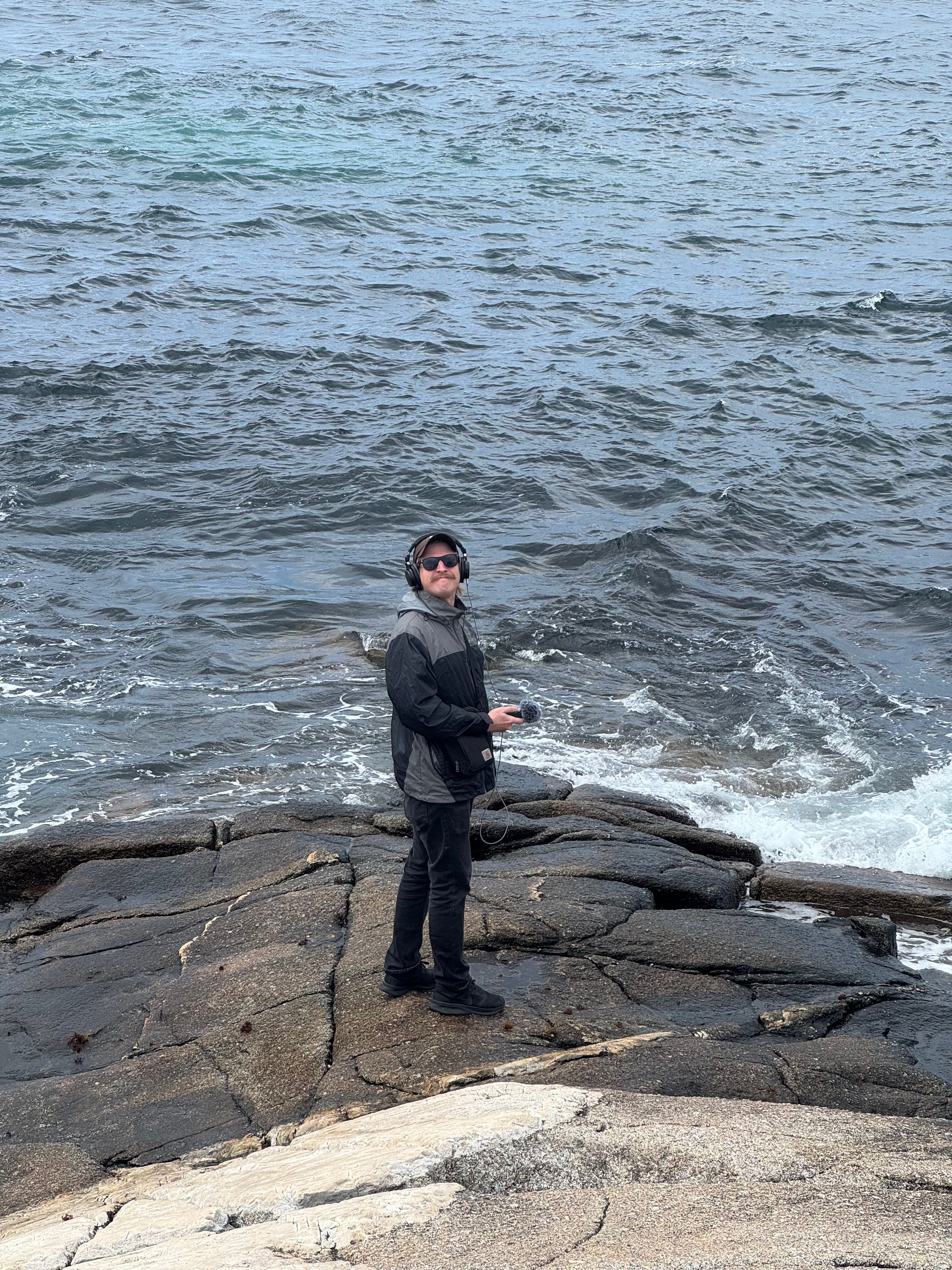
Anyway, I saw a pair of humpback whales synchronized diving and breaching on a whale-watching tour (our second attempt, after the first yielded absolutely nothing and the boat gave us a free second chance), which left my dad a little more than green around the gills and a whole bunch of kids and teens puking off the sides (read A Supposedly Fun Thing I’ll Never Do Again). My niece is growing up so fast, and she has this really interesting blend of her mom’s and dad’s personalities. It was just nice to get out and explore somewhere new, even in the middle of all the chaos of packing and moving.
I was hoping to write a lot more about this because I thought about a lot of stuff while I was there, including but not limited to whales and thoughts on Moby-Dick; watching a provincial man become a global citizen before my very eyes; the politics of the French language between Canada and Switzerland; and how you can tell a lot about a place by its best bookstore (which is certainly an essay for another time).
I would recommend Halifax.
The Part About Composing
I thought about just leaving this spot blank with just “lol” written, but I guess a few things to say…
I wrote the text/outline description of a really cool noise piece for orchestra/large ensemble. This one lives in the Museum of Imaginary works for now, but if everything goes according to plan, I’m thinking this one might be possible for a 2027 thing. We’ll see.
As far as future projects go, I have a few things lined up and in the works that I’m very excited about and have had zero bandwidth to even touch: contrabass concerto, choir and sine waves piece, a short ditty for a compilation release, an hours-long extended duration piece, and a few other things brewing.
I recorded the trio for Monte Espina and myself – the final recording I will probably ever make in the MEIT, where pretty much all of the Texas Series releases are to be found…
… speaking of… the Texas series is back!
I’ll admit, I’m a little self-conscious about a number of things with this. Some of the writing for sure makes me deeply anxious: is this too sentimental? Is it schmultzy? It wasn’t trying to be, you can check out the score here: https://www.koryreeder.com/great-plains-song-book. A ton of work and research went into this and the piece is so deeply personal to me; I’m not afraid to admit that I cried at one point. Especially now, leaving today there is a part of me that almost feels like I’m turning my back on the great plains… more on that in the future as I process a few things...
Originally intended to be performed with an additional 4 musicians, but that didn’t really work out so we made due with just the three of us. I was hoping to record this with the full compliment, but that hasn’t happened yet. I don’t know when it will, but it will; in the meantime I figured I’d post this for now!
The Part About Music
I need to make a database of experimental orchestral works, especially those works that don’t necessarily require the ability to read traditional music. Send me your recs, please! I’m tryin’ to get a band together in the very near future…
Bandcamp Friday Purchases:
My Eyes See Without Looking by Alessandro Rovegno
Field recordings fra Amager by Martha Hviid
The Holy Liftoff by Claire Chase, JACK Quartet, Terry Riley, Samuel Clay Birmaher
Exhausted Mechanisms by Kelley Sheehan & Jack Langdon
Fishermen’s Souvenirs by Teresa Hackel / Eiko Yamada
Seyðisfjörður Soundings by Kite Choir
Undercurrent / Wanderlust by Ayami Suzuki & Leo Okagawa
Open the windows and let the spirits in and out by Ángeles Rojas
Situation and Event by Morgan Evans-Weiler
Vertical London (New Year’s Day) by Kate Carr
Almost New York by Alvin Lucier
Alvin Lucier: Navigations by Quatuor Bozzini
L’oreille Voleuse by Brunhild Ferrari, Eiko Ishibashi, Jim O’Rourke
Field of Vision by Michael Gordon, Doug Perkins and the University of Michigan Percussion Ensemble
Slot Machine Music, Vol. 1 & 2: Field Recordings from Middle American Casinos by Adrian Rew
one to two by j p a falzone & luke martin
Transparent Duo by Teodora Stepančić
Songs of Erosion by Clara Levy & Victor Guaita Igual
Slow Drag the Devil by Andrew Weathers
ísland | pípu tónlist by Jez riley French
rain birds by Jez riley French
I went down a few weird rabbit holes with Horaţiu Rădulescu, Gloria Coates, and Ivan Wyschnegradsky…
Also:
The Part About Sawyer Editions
Moving and a million other things continue to slow down Sawyer Editions. Initially I was hoping the new release date would be September 16th, but I have a strong feeling we’re looking more like October 1st. Remains to be seen.
Anyway, it’s like 95% done, it just needs to go out.
So, I’m going to quietly tell you what’s happening…
5 new albums with music by David Dunn performed by Apartment House; Myra Hinrichs performs her own solo violin music while singing; Ed Williams plays harpsichord with wild intonation; Ben Luca Robertson and Matt Sargent play some stellar new pieces together; and Sam Longbottom plays some wild organ music.

The Part About Books
“Stalingrad” – Vasiliy Grossman (secretly a partial essay about “big books”)
I cranked through this big-ass book in something like ten days. It’s a big book. It’s not exactly a hard book, but it is a hard book to situate, which is actually what makes it such an interesting book to think about. It falls into a ton of different categories and a ton of different weird little niche zones that I find interesting, and all of those things accumulate into a pretty special art object.
First of all, there’s a weird aura around Stalingrad. Vasily Grossman was a boots-on-the-ground military correspondent for the Red Army newspaper, and he was also the first Allied war correspondent to write about the concentration camps, specifically Treblinka. His work and this book in particular was subject to censorship during the latter years of the Stalin era, before the Khrushchev Thaw. I don’t know if “censored” is exactly the right word (I don’t have enough time to dig into the weeds on all that) but the book was certainly touched by the machinery of official Party apparatus. It is also the first part of a two-part diptych, with Grossman’s best-known work in the English-speaking world, Life and Fate, being the second. I haven’t read Life and Fate yet, but it seems to be inseparable from any conversation about Stalingrad. Everywhere you look, from the Goodreads reviews, Reddit conversations, the foreword and afterword of the book itself, there is some constant comparison or some theoretical dialectical exchange between the two.
There are even plenty of people asking whether you should bother reading Stalingrad at all, which I found kind of funny. I found a few comments that I’ll insert here because they articulate something I agree with pretty strongly: the question itself is kind of dumb. The actual feeling of Stalingrad when you take it in relation to Life and Fate is that this really is part one. The book suddenly ends in September, while the Battle of Stalingrad lasted from July to February, and I’ve heard (although I haven’t been able to confirm this) that Life and Fate basically picks up immediately afterward. So I don’t really understand the impulse to treat these as two entirely separate objects, especially when the characters and situations are carried between them. What I find particularly strange is that Stalingrad was translated into English well after Life and Fate, even though it was published first, so the English-speaking literary world encountered this thing backwards. People encountered the second half and then had to decide whether the first half was worth going back to. I don’t know. It’s a very weird relationship, and I’m hoping that once I read Life and Fate, the two books will become more complementary and start to make sense as a larger opus.
I want that larger-opus thing to work, partially because so much of the material surrounding Stalingrad talks about Tolstoy and the influence that Tolstoy had not only on Grossman but on Soviet literature more generally. I think the comparison is pretty apt: if you’ve read War and Peace, there are a ton of similarities in the technique of Stalingrad as a work of historical fiction. Grossman even explicitly invokes Tolstoy in the book: “It was all very well for Tolstoy—he wrote his great and splendid book decades after 1812, when the pain felt in every heart had faded and only what was wise and bright was remembered.” We get to Tolstoy’s house in Chapter 50 of Part One, and then the bombs don’t really start dropping until something like 550 pages in. I can dig that.
Another comparison to Tolstoy is the sheer multitude of characters and voices. No doorstop-sized Russian novel worth its salt can go without an appendix explaining how Russian names work and a list of characters, and Stalingrad has a “List of Chief Characters” with something like 150 people. I could really only keep track of maybe a dozen of them without constantly flipping back. That might actually be the hardest part of the book: keeping track of the individual characters.
I found myself becoming really invested in that dozen or so, especially the core family and some of their peripheral friends, because the book is so polyphonic and sprawling. It goes everywhere. There are long sections with characters I simply didn’t care about that we spend quite a bit of time with, and this is one place where I think War and Peace is more successful.
In Stalingrad there are a lot of women who are extremely powerful figures within their spheres of influence, and I loved how flushed out these characters were.
There are a lot of side scenes, a lot of peripheral characters who don’t necessarily grab me individually but contribute to this much larger portrait.
The book is constantly moving between different people, different places, different scales of experience, and eventually it just suddenly ends in September.
The book is also a work of socialist realism, which I’ll be honest I mostly knew about through visual art, or Shostakovich or whatever, but not really through literature. So this was probably the first work of socialist realism I’ve actually read, and I had to do some grappling with what that actually means as a literary form. There are also a ton of comments about how this book is simply loaded with propaganda, and I don’t think that’s entirely true. Or at least, I think that’s a much more complicated question when you consider what it might actually have felt like to be a Soviet soldier at that moment. Or, if you think about Grossman’s personal experiences having been there and having seen the holocaust and having seen what the einsatzgruppen were doing. There’s this whole mythology in the West around Stalin’s Order 227 and the idea that Soviet soldiers were being forced forward by rear gunners who would shoot their own people, which is mostly US propaganda around penal battalions, and obviously there was pretty intense discipline within the Red Army, but the way Grossman and many soldiers who were actually there describe the order is much more complicated than that. There was a sense that Stalingrad really was a do-or-die strategic position. They knew it. Everybody knew it. So when you encounter that kind of rhetoric in the book, it’s difficult to reduce it to simple propaganda because some of it was articulating something that people already believed about the situation they were actually living through. If you have legitimate reason to believe that losing this battle will mean the death of literally everyone you’ve ever known and loved… we’d all like to think we’d probably give it a good effort too.
[...]
Ultimately, I gave the book three out of five stars. The biggest reason is that I wanted to hang out with some of these characters more and focus in on a few things. Grossman can build a character really, really well, and I cared about a lot of these people, but we didn’t always get to spend enough time with them. That made several sections of the book less compelling than I wanted them to be. At the same time, I think the overall effect of the polyphony and the multiple perspectives, the shifting between fictional characters and real historical figures, the actual historical battle, the strategic situation, the enormous geographical and political scale all adds up to this really beautiful portrait. It affirms what literature can do, even if it didn’t necessarily satisfy me in every individual moment.
Which raises the obvious question: why would I read a thousand-page, three-out-of-five-star book?
I think that’s actually a pretty interesting question, because I see versions of it constantly whenever people talk about books. There’s this weird cost-benefit calculation around reading now, this idea that your time is scarce and therefore you should only spend it on the best possible things. If a book isn’t immediately blowing your mind, why keep going? If a television show isn’t excellent, why finish it? If a record isn’t perfect, why listen to the whole thing?
While I think our time is genuinely scarce and I fully acknowledge the privileged and sacred quality around any downtime, I think there’s something deeply tied up in the commodification of attention here. The logic of capital has infected the way we think about our own time to the point that even leisure becomes an optimization problem. Every book has to justify the hours it takes to read. Every movie has to be worth its runtime. Every album has to earn its place in the queue. We’re constantly asking whether something is worth the time instead of asking what might happen if we simply gave ourselves over to it. And by god, boredom is never allowed: you must fill the air with music, podcasts, TV, and make your time worth it rather than just feel it…
Stalingrad made me think about a shitload of interesting things. It made me read a shitload of interesting Wikipedia articles. It made me think about Soviet literature, socialist realism, Tolstoy, censorship, war correspondence, historical fiction, propaganda, and the relationship between Stalingrad and Life and Fate and a ton of other things. So, the value I got from reading it goes way beyond whether I thought the book itself was “good.”
There are probably thousands of books that are shorter and better than Stalingrad. That’s not really the point. If I bailed on every book that didn’t completely satisfy me, I don’t think I would ever finish anything. More importantly, I don’t think I would have the kind of internalized multiplicity that comes from having read a lot of books that are good, bad, weird, boring, beautiful, frustrating, mediocre, incredible, or some combination of all of those things. A reading life made entirely out of the best-of-the-best would be a profoundly impoverished reading life.
Obviously, I have the privilege of having the time and mental bandwidth to read in the first place, and I’m lucky that I can read relatively quickly. But I also think there’s an interesting comparison here with television. I’ve had countless people tell me that they binge-watched an entire television series that they ultimately didn’t even like very much. Nobody seems particularly surprised by this. Somehow, though, reading a thousand-page book that you only give three stars feels like an existential decision.
I think some of that has to do with the prestige attached to literature, the idea that reading a book is somehow a more serious or valuable activity than watching television or a movie. I don’t really buy that. These are different activities. The question is how you engage with the art object. If you’re binge-watching Netflix while scrolling on your phone, you’re probably not engaging with the thing in the same way you would if you actually sat down and gave it your attention. But the same is true of reading. If you’re checking your phone, having a conversation, half-reading, half-thinking about something else, and just trying to get through the pages, I don’t think that’s necessarily some inherently superior form of engagement.
There’s something valuable about giving yourself over to the slow pace of a thing. Sometimes the value of a book is the plot or the characters. Sometimes it’s the construction, the form, the technique. Sometimes it’s what the author is trying to say philosophically. Sometimes it’s the weird constellation of things that the book causes you to think about afterward. Sometimes it’s simply the experience of having spent ten days inside somebody else’s enormous, strange, imperfect object.
I think those are probably the three things I’m always looking at when I read: how the book is constructed—form, technique, all that normal book-nerd shit; the ordinary experience of the book—plot, characters, all the stuff we usually talk about when we talk about whether we liked something; and then what the author is actually doing philosophically, what they’re trying to say or ask or make you think about.
Stalingrad didn’t completely work for me on the second level. But it gave me a shitload on the first and third, and it gave me a bunch of other things I didn’t know I was looking for. Three stars, I guess. But I’m still really glad I read it, and I’ll be on the lookout for Life and Fate in 2027.
“My Poets Don’t Die” - Qutouf Yahia
From the New-Generation African Poets boxset: this one blew me away. As you probably picked up if you’re reading these in order, I’m writing these entries immediately after reading the book – in each case, I put it down on my desk and went right to my laptop, like I am now. Because you’re getting my immediate reaction, there’s a lot of vibes-based analysis happening, and while I’ve read each poem in each book more than once (how does one really even “finish” a book of poetry? [an essay for another time]), there are only a few that really left me glowing and knowing I’m going to come back to them - “Invocations” by Kolawole Samuel Adebayo is one, and this is certainly another.
This collection sees the author as a historian of poetic lineage but also of the capital-W body of Woman/Women who are named, referenced, recited, and given (at the forward says) their “proper historic register” – a key line: “I belong to more than I know.” The notes in the back give even more to explore and I’ll be digging into those in the future: more poets, more people, more stories. Still, “we learn that this speaker is an inevitability of all those who came before.”
Stellar, really amazing lines of love: “and everything I write is a love poem / a woman wailing is a song still.”
“Sister” - Hauwa Shafii Nuhu
From the New-Generation African Poets boxset: Hate to say that the final entry in this collection left me a bit cold. I read through this closely and deeply and found so many things to love that I didn’t quite resonate with from a stylistic standpoint. I don’t quite know how to explain this but I simply found my mind drifting and getting distracted every time I sat to read. That doesn’t mean there is anything that really turned me off or that I found myself allergic to here, there’s plenty to love, but I’m finding myself thinking a whole lot about a more meta issue that I will now address in an entry on the boxset as a whole…
“Invocations” - Kolawole Samuel Adebayo
From the New-Generation African Poets boxset: For the first half, these poems read like prayers, sacred rituals, or something like the biblical Psalms, and the biblical reference goes all the way back to the beginning of the book: the very first lines are “in the beginning,” referencing Genesis 1:1. Several poems are invocations or prayers relating to water, the sea, and the body, and to the ways those things relate to mythmaking, heritage, our relationship with a more sacred sense of the past, and a spiritual understanding of deep time. “I grieve more because I have lost the history of my ancestry.” This might be a little hyperbolic, but I felt a real connection here with the Psalms, Meister Eckhart, and St. John of the Cross. I could see this book resonating extremely deeply with some people, while other people might find themselves deeply allergic to it.
Then the occasion shifts into something more personal and reflective, and it kind of lost me. A Hozier quote as an epigram before a poem... that didn’t do it for me. It kind of gave me the ick. I preferred the mysticism. At the same time, some of the metaphors start getting flipped around: early on, the author refers to themselves as a door that needs to be broken down, but later says “I open myself like a door,” and later still returns to the door as something waiting. This could be some sort of narrative progression, but it doesn’t really feel like one. The metaphorical shift is just one example of the effect of moving from the mystical beginning into the more personal ending: this could have been a planned narrative structure, but it doesn’t quite feel like one. It’s just kind of there… which I think is a shame.
“Keep the bodies buried” - Selina Nwulu
From the New-Generation African Poets boxset: I don’t know if this makes any sense, but this feels like the most “millennial” collection in the box set so far, which is admittedly more of a vibe-based impression than anything else. A lot of that comes from the formal choices in the text: there are multiple poems that consist of an entire page of lines beginning with the exact same word. Actually, there are only two of them; one begins with “and,” describing somebody, and the other begins with “before.” This is a style I’m really not into, and I struggle to connect with it even when I’m reading someone like Walt Whitman, who uses constructions like “and the blank do blank” over and over again. It’s just not my thing.
That said, a few of these really resonated with me, particularly the first one, which is a prose poem and immediately had me hoping and wishing for more prose poems. There are also some individual lines that really got me, like “why did opening my lips feel like breaking bread” from “Replay,” which reads to me as this somewhat bi-curious, flirtatious text and was one of my favorites. The strongest, though, was “Half Written Love Letter,” which is extremely identitarian but not in the superficial, very millennial way that just announces itself as shallow or rich or whatever; this poem is genuinely well written and absolutely crushing in its brevity.
So, I don’t know. A little bit of a mixed bag for me. I can’t help but feel like the collection, or at least the box set, was stronger near the beginning. I’ve spread these readings out enough that it’s difficult to maintain a coherent sense of the whole thing, but I’m starting to feel myself losing some enthusiasm.
“Koola Lobitos” - Ajibola Tolase
From the New-Generation African Poets boxset: OK this one bounced the collection back a lot for me. This one is a multi voice, multi occasion portrait of what is described in the preface as “the social imaginary of the project called Nigeria.” A lot of times when I read Poetry that is ostensibly multi voice and multi occasion, I struggle to decouple the fact that this is written by a single author, and that doesn’t mean that that can’t be the case because in something with The Wild Iris by Louise Glück there’s multiple points of view, etc. but it’s just not as obvious in a text like this, at least not all the time: there are instances where it’s clear that we’ve shifted from one to another, especially when things like occupation and social status is brought into the picture. But this one works because we’re looking at a portrait of Nigeria spanning from pre-colonization to the present: there’s also a unifying factor here with several references, including the title to Nigerian musician Fela Kuti (I highly recommend and have really enjoyed listening to you since reading this). Oh yeah, the poetry is also pretty damn good too. Some of these lines are gut punches, and some of them can really open the door.
“Miryam Magdalit” - Jeremy Teddy Karn
From the New-Generation African Poets boxset: I don’t wanna take up too much of this review with the words of somebody else, but I wanna quote hear from the preface “on first reading appears to explore the relationship between a mother who is a Liberian Civil War survivor and her son, the speaker of the poems. On close reading, however this supposed mother-son story quickly evolves into a metaphor for larger issues and things: war, family dysfunction, trauma, and devastation wars inflict on generations of people.” This is all true. The book is also full of references to biblical figures especially Mary Magdalene (see title). I wish I had more to say about this, but it honestly just left me pretty cold. I’m not sure I completely resonated with the metaphors here or the biblical references, despite catching them and knowing them and realizing them as I’m reading this, the shortest in the boxset. So much of it just passed through me in a way that none of the others really did. That’s not to say that this is “the worst” of the collection… and I don’t think I could really pin down an order for that (I think I mentioned how I’ve spread these out far enough that does make it somewhat difficult for me to tell any sort of preference across the entire box set), but this one passed through me
New-Generation African Poets: A Chapbook Box Set (Nane)
The limited-edition box set is an annual project started in 2014 to ensure the publication of up to a dozen chapbooks by African poets through Akashic Books. The series seeks to identify the best poetry written by African poets working today, and it is especially interested in featuring poets who have not yet published their first full-length book of poetry.
This box set is not for me. I mean it’s not for me; it is not toward me. Or is it? Or is that even my call to make? Who am I to judge and assess and analyze from my own privileged point of view, my own narrow context of a wholly Western, Westernized, and settler-colonial standpoint.
….
Fuck, I really wanted to write about this… tune in next time.
“Dear Committee Members: A novel” - Julie Schumacher
[notes unwritten, but it’s very good and very fun. A gift from Rachel Lanik Whelan: I’m sorry Rachel, I wasn’t able to give this a full rundown like I wanted...]
“Split Tooth” - Tanya Tagaq
[notes unwritten. Extremely heavy, extremely dark in many places, and really beautiful – affirming the medium and telling a story in a way that can only be done in writing]
The Part About Movies – Notes Unfinished
Permanent Vacation (1980)
Jim Jarmusch’s first movie. Endlessly creaking and vocal fry-laden, poorly orated monologues from our hero, the angsty Charlie Parker-loving hipster, Allie as he wanders aimlessly around otherwise abandoned sections of New York City meeting interesting and bizarre characters. Yeah I didn’t like this… but what is no wave film?
Dr. No (1962) and From Russia with Love (1963)
Were they understood as goofy and campy or were they considered prestige films? There’s a fine line between this and Star trek; From Russia with love feels very Indiana jones - what is the relationship between those?
The Part About Racing – Briefly
The last several years I’ve really come out of my shell about my love of motorsport and I have been pretty evangelical about it. I’m telling you, if you give me an hour I’ll have you wanting to try it out, and if you do and pay attention, you’re apt to love it (if not appreciate it). The two years I worked at Dan’s Silverleaf, it started as a thing I did on my phone while working door and because a low-key “NASCAR Bar” with pretty much everyone that goes there knowing we’re all into NASCAR now. I’m just saying publicly that I am deeply, deeply saddened to be losing this part of my in-person social life and I’m really hoping this will grow and become something with the move. New England isn’t exactly what you think about when you think about NASCAR, but I’m within, like 4 hours of 4 different tracks that I would absolutely love to go to.
There’s, like, not a lot of people in the music world, especially our weird little niche of the music world that are particularly interested in this sort of thing, but I’ve been told that the racing corner of this blog is sometimes the most interesting. Go with me on this one, folks. If you’re in the Hudson Valley or NYC or New England and you’re even remotely curious, drop me a line.